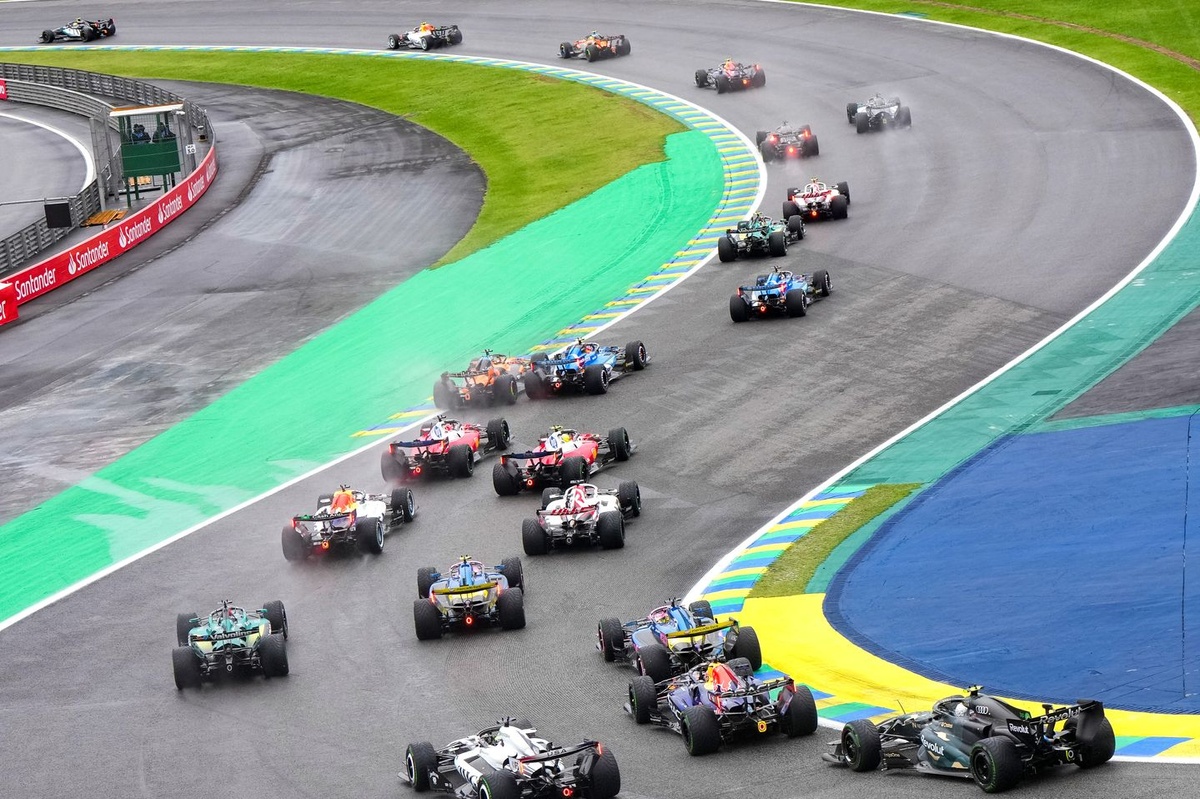
What the Brazilian GP revealed about F1's ability to cope with rain

Formula 1’s first real wet-weather test of 2026 came at Interlagos, and it renewed the sport’s debate over how safely and fairly rain races can be handled.
The question of what happens in a wet grand prix has been hanging over the season for months, and the conversation grew louder than ever before last weekend’s Brazilian Grand Prix. By then, rain for qualifying and the race was a virtual certainty for the first time this year, turning Interlagos into the championship’s clearest examination yet of its rain procedures.
That mattered because wet conditions alter every part of a Formula 1 weekend. Visibility drops, braking points become harder to judge, tyre choices grow more complicated and a race can change shape in an instant through cautions, interruptions or timing calls. When the track is soaked, the sport has to weigh spectacle against safety with very little room for hesitation.
Interlagos also carried a broader significance because it moved the rain debate out of theory and into practice. All season, stakeholders had been asking how F1 would cope if a major session turned wet. A weekend like this forces organisers, teams and drivers to deal with the same problem at the same time, under the same conditions, with the margin for error narrowed sharply.
For teams, rain is not just a matter of speed. It is a test of strategy, communication and preparation, from setup choices to pit-wall calls to the driver’s ability to manage risk on a changing surface. For fans, it can produce some of the most dramatic racing of the year, but it can also expose how fragile the sport becomes when conditions shift.
What Interlagos revealed, above all, is that Formula 1 still has to answer the same question every season: how to preserve competition when the weather stops behaving. Whether the Brazilian weekend settles the debate or only fuels it further remains to be seen.